Problem
When I picked up tennis in Portland, the hard part wasn't the game. It was getting onto a court in the first place. Where do you play? Who do you play with? The answers were scattered across city pages, Reddit, and group chats, and none of it was written for someone just starting.
Process
I began this as an exhibition, a project about making tennis less intimidating. It looked good. It didn't help anyone. In a thesis critique, someone asked the question that broke it open: "How do people actually find this?" I didn't have an answer, so I changed the project: not an exhibition about tennis, a tool for the people trying to play it.
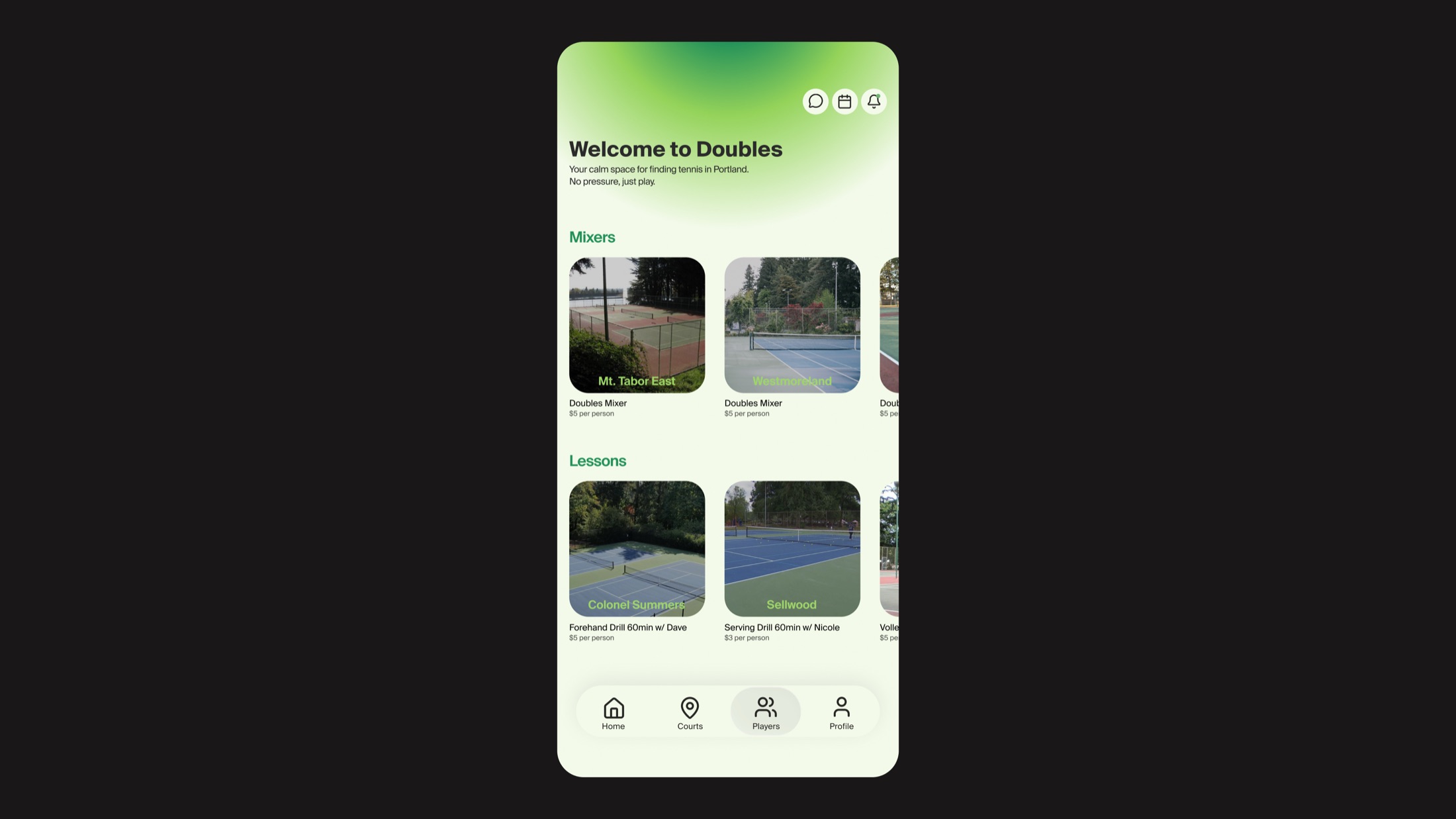
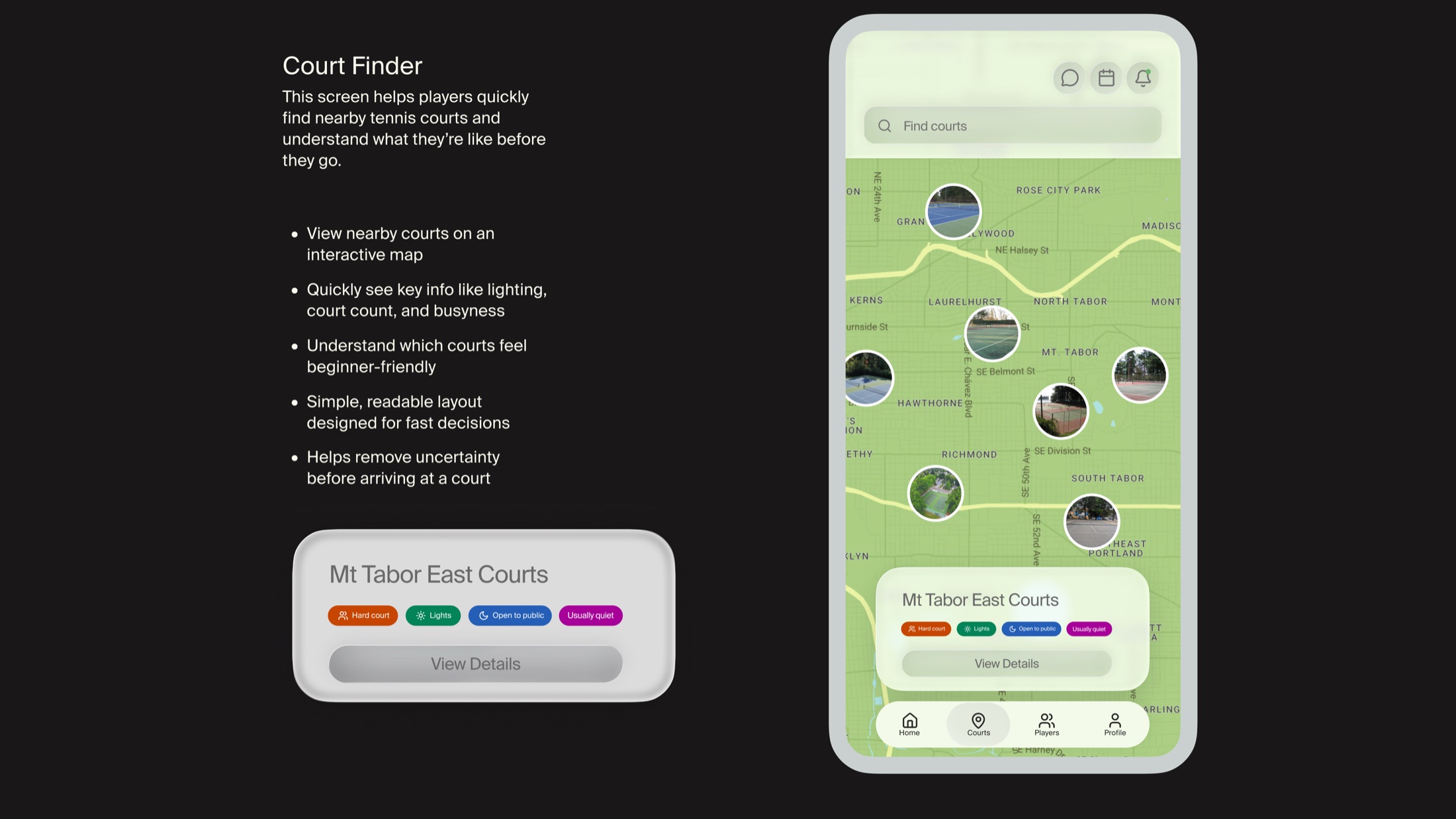
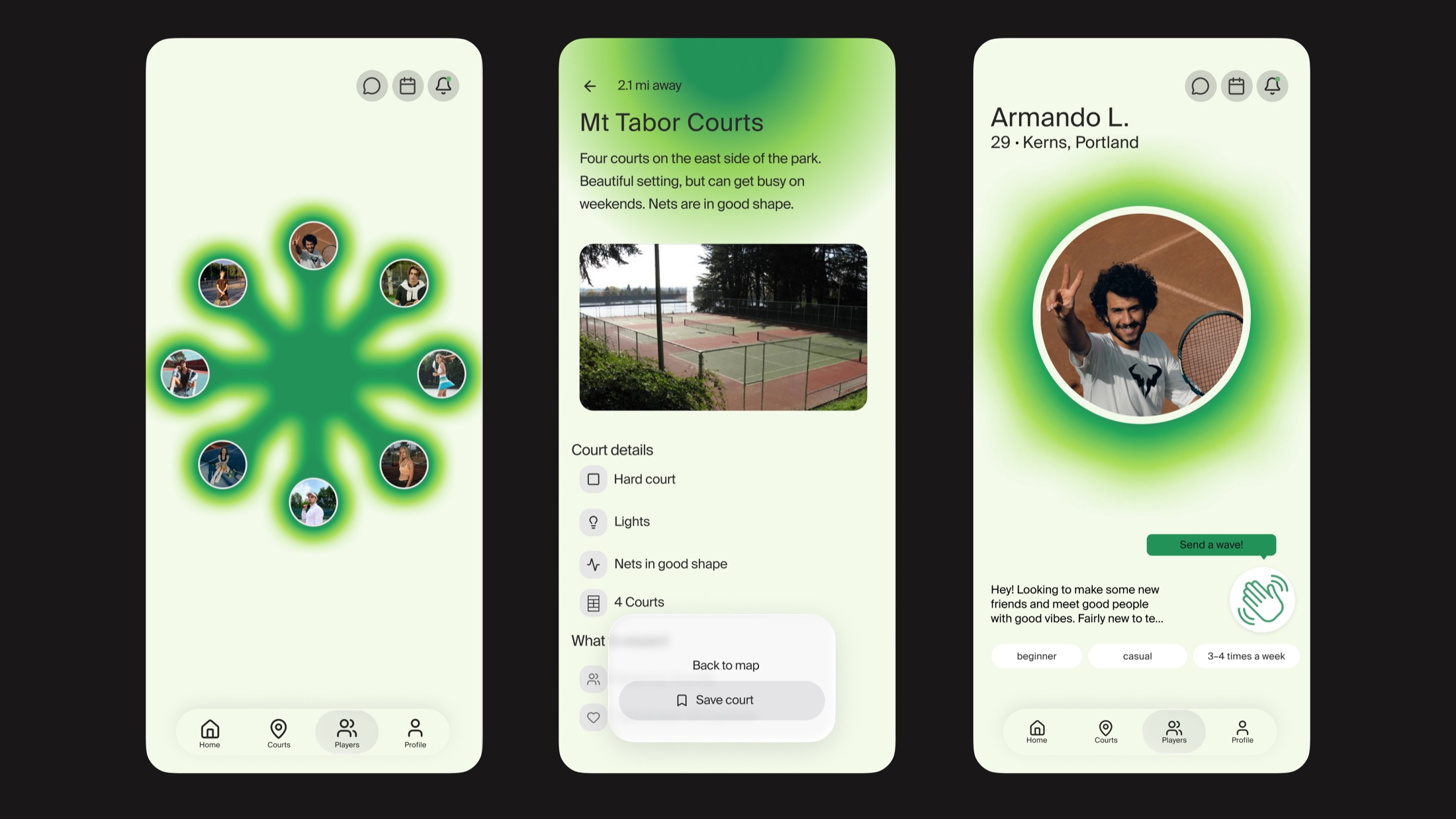
Research kept hitting the same two walls. Courts are hard to find, and even when you find one, you still need another person. Portland wasn't short on courts or leagues; it was short on a way in. So I stopped designing for competition, the stats and rankings every sports app leads with, and designed for what beginners actually dread: looking like they don't belong. Two jobs became the backbone, finding a place to play and finding someone to play with, and that's where Court Finder, Player Connect, and local mixers came from.
Most sports apps are loud and competitive. Doubles goes the other way on purpose: soft greens, plain language, an unhurried pace, so it feels like an invitation, not a leaderboard.
Outcome
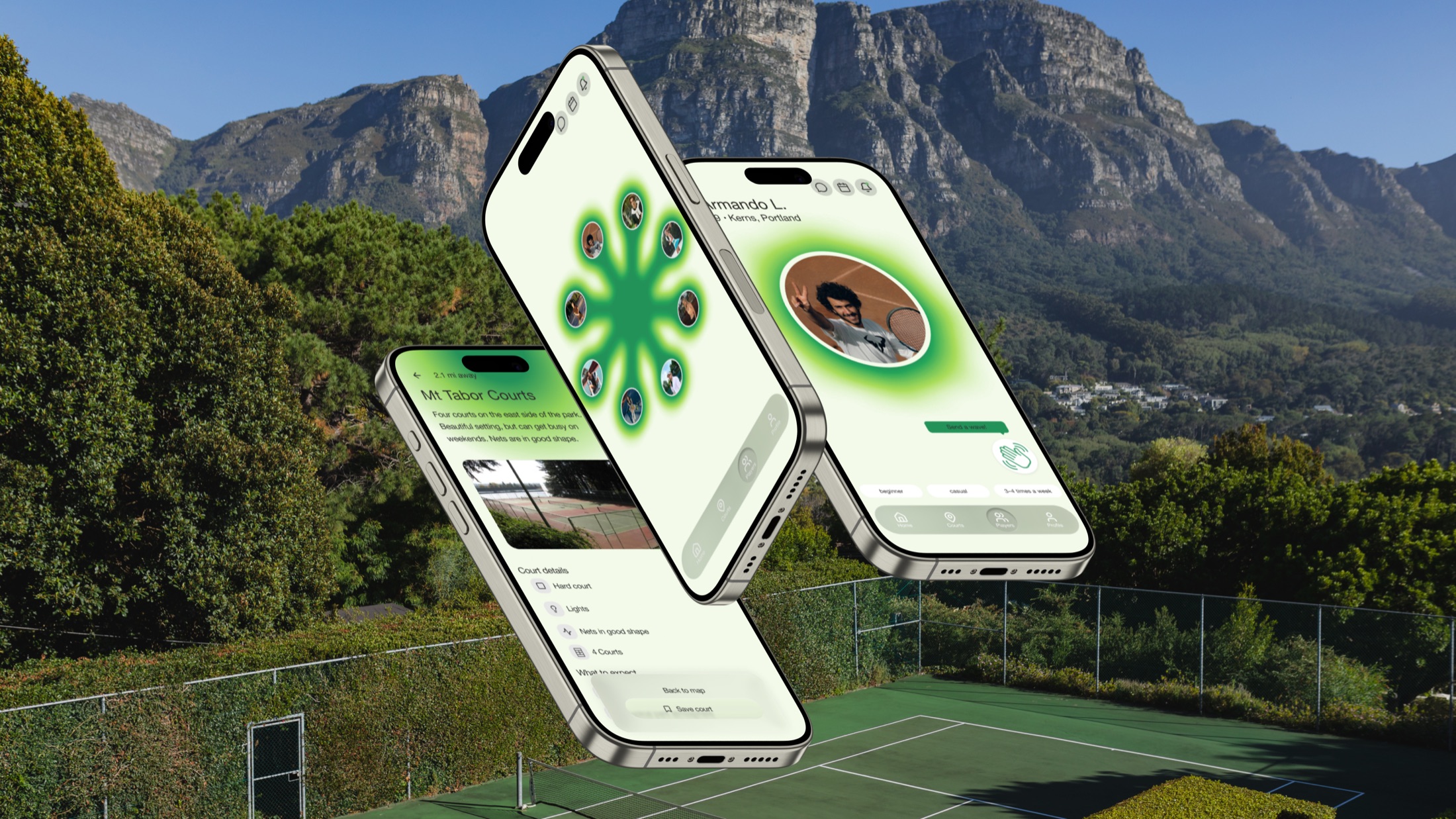
The result is a high-fidelity prototype that walks a new player from "I want to try" to standing on a court — onboarding, court discovery, player matching, events, and a full identity. The part I'm proudest of isn't a screen, though. It's that I let research kill my first idea and rebuilt the project around the real problem.