Problem
Cameras are such an ordinary part of life now that it's easy to forget someone had to make them simple. In 1888 George Eastman sold the first Kodak with a promise, "You press the button, we do the rest," and for the next century the company shaped how people took pictures. The brief was a timeline. The challenge was fitting more than a hundred years of cameras, ads, and film into something a visitor would actually want to move through.
Process
My first plan treated the story as data. The concept worksheet put sales on a bar graph, cameras and new technology on one shared line, and film prices on a spiral chart. In the first round I tried a stock-price graph animated to read like a timeline, and tested other timeline shapes with placeholder blocks. By the second round the graph was gone and the piece had become a story: a title page with photos and video, and a timeline built out era by era.
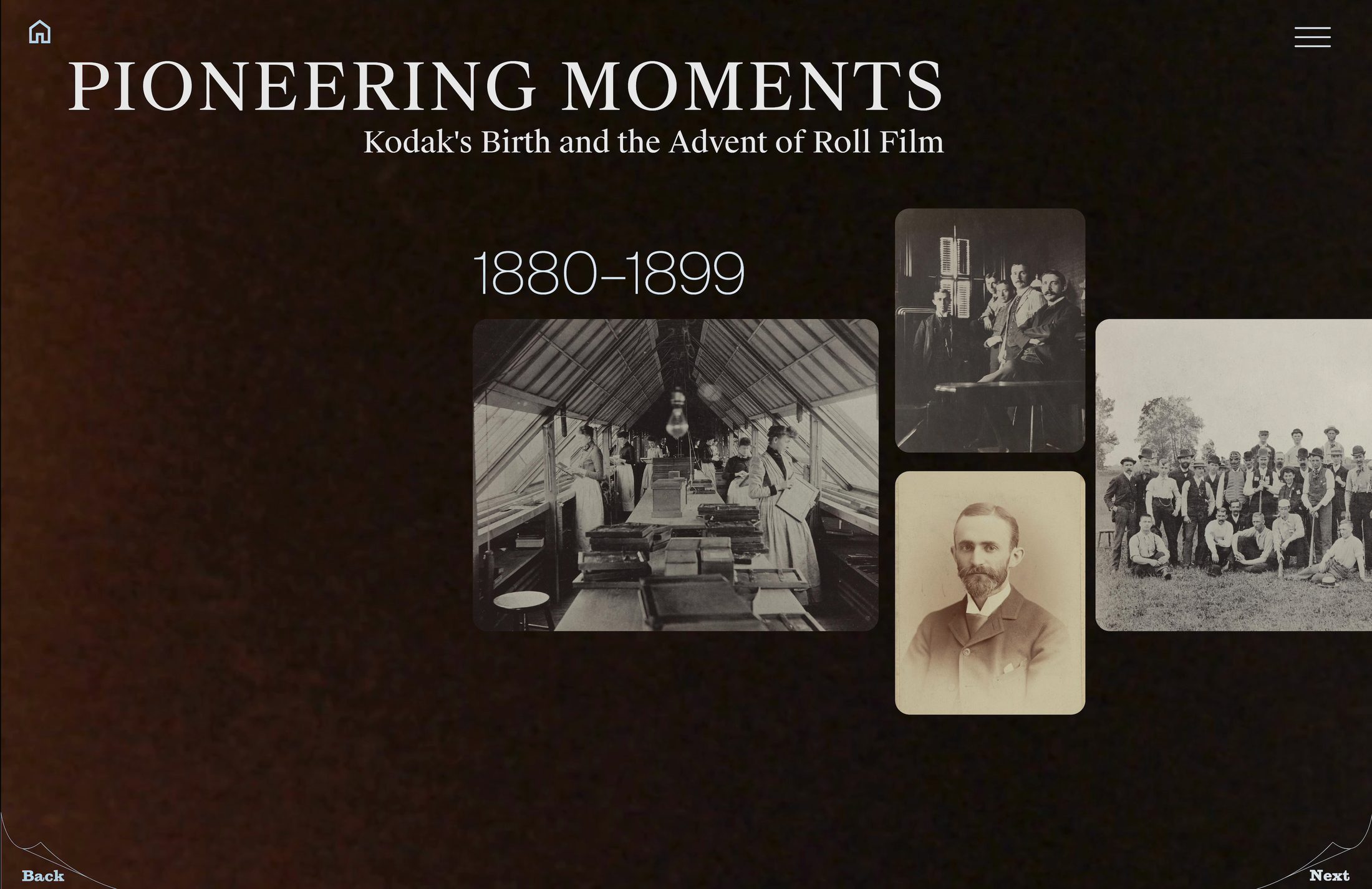
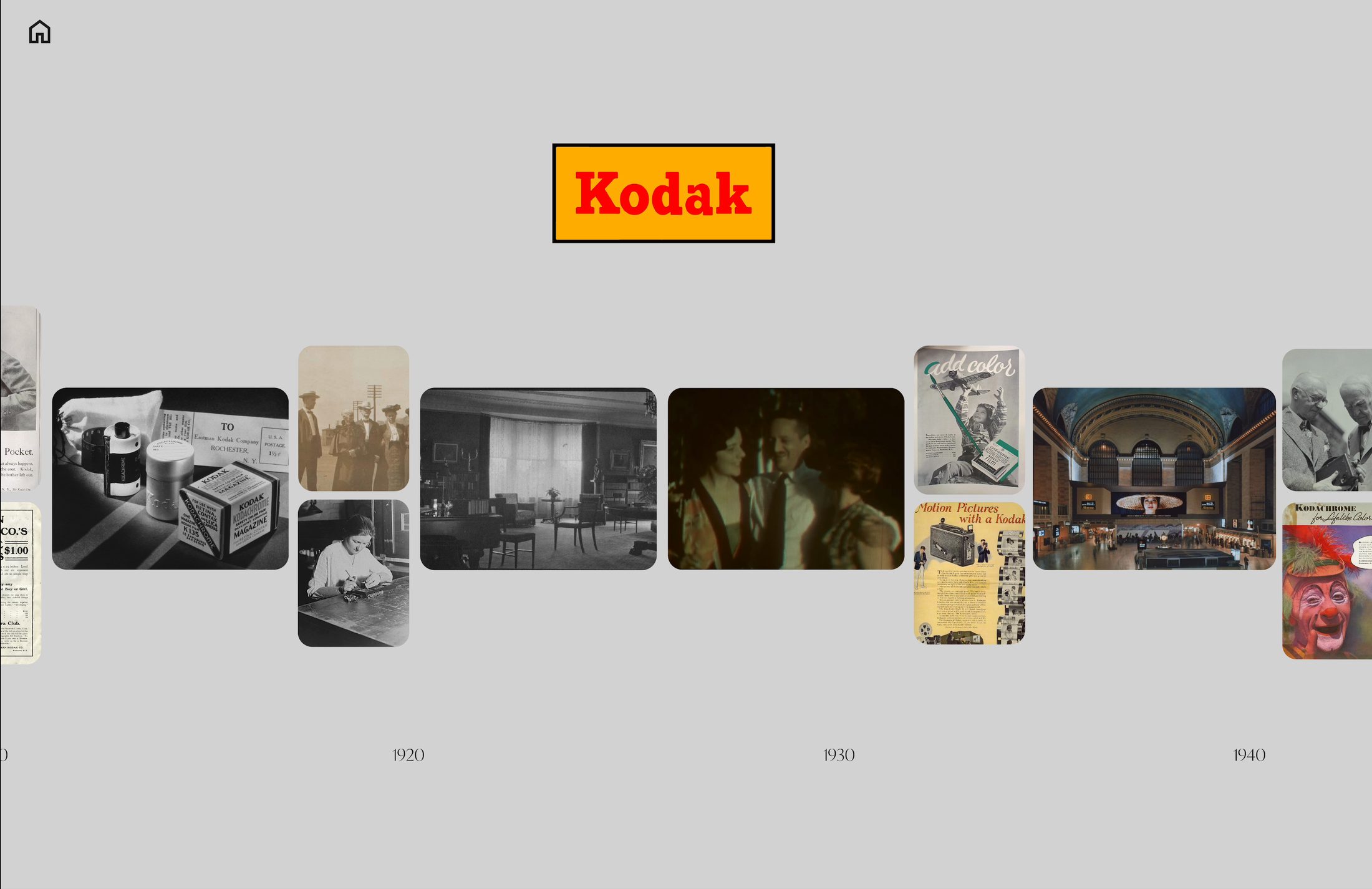
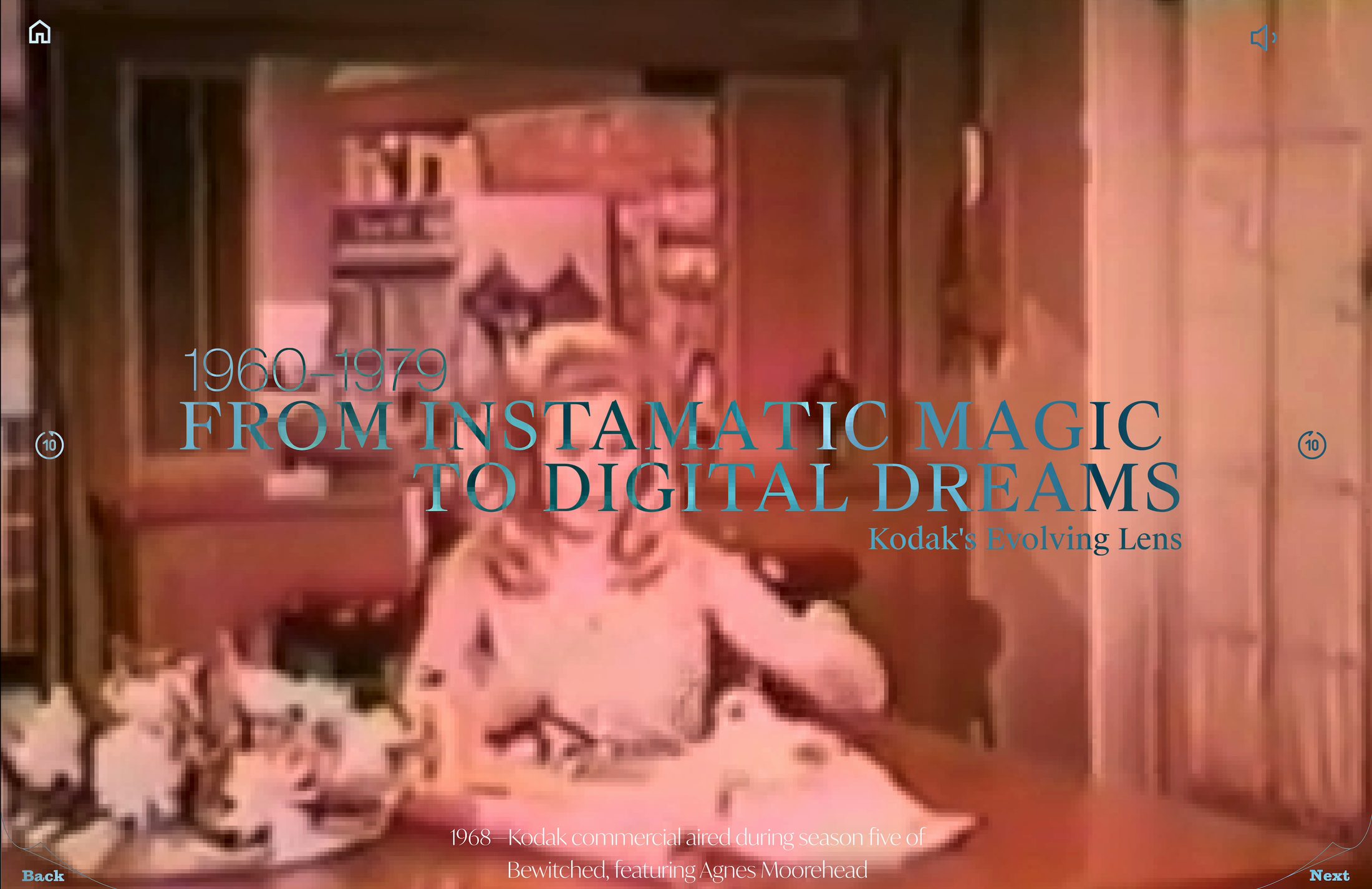
The model came from websites that tell a story as you scroll. I settled on a horizontal scroller. Each era opens with its own title card, then spreads out into photos, ads, and footage: old commercials, color test shots, and home movies shot on early Kodak film. A menu in the top right opens a larger view of the whole timeline.
The type changes with each era, taken from the look of Kodak's own advertising at the time, and the artifact cards borrow the folded page corners of classic Kodak ads and the 1960s logo. The color stays plain so the historical material takes center stage, and a clip of film grain runs underneath the whole timeline as a texture.
Outcome
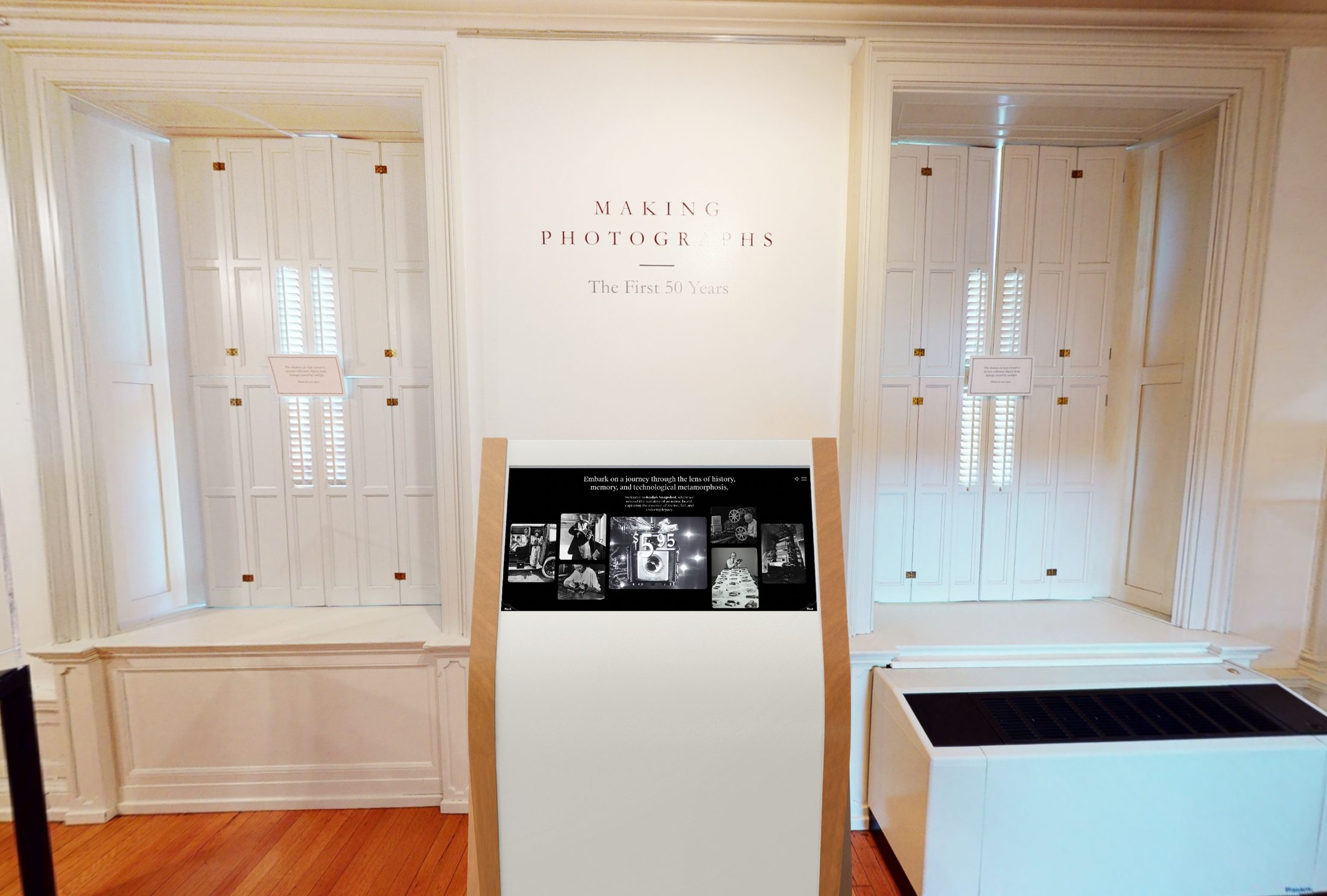
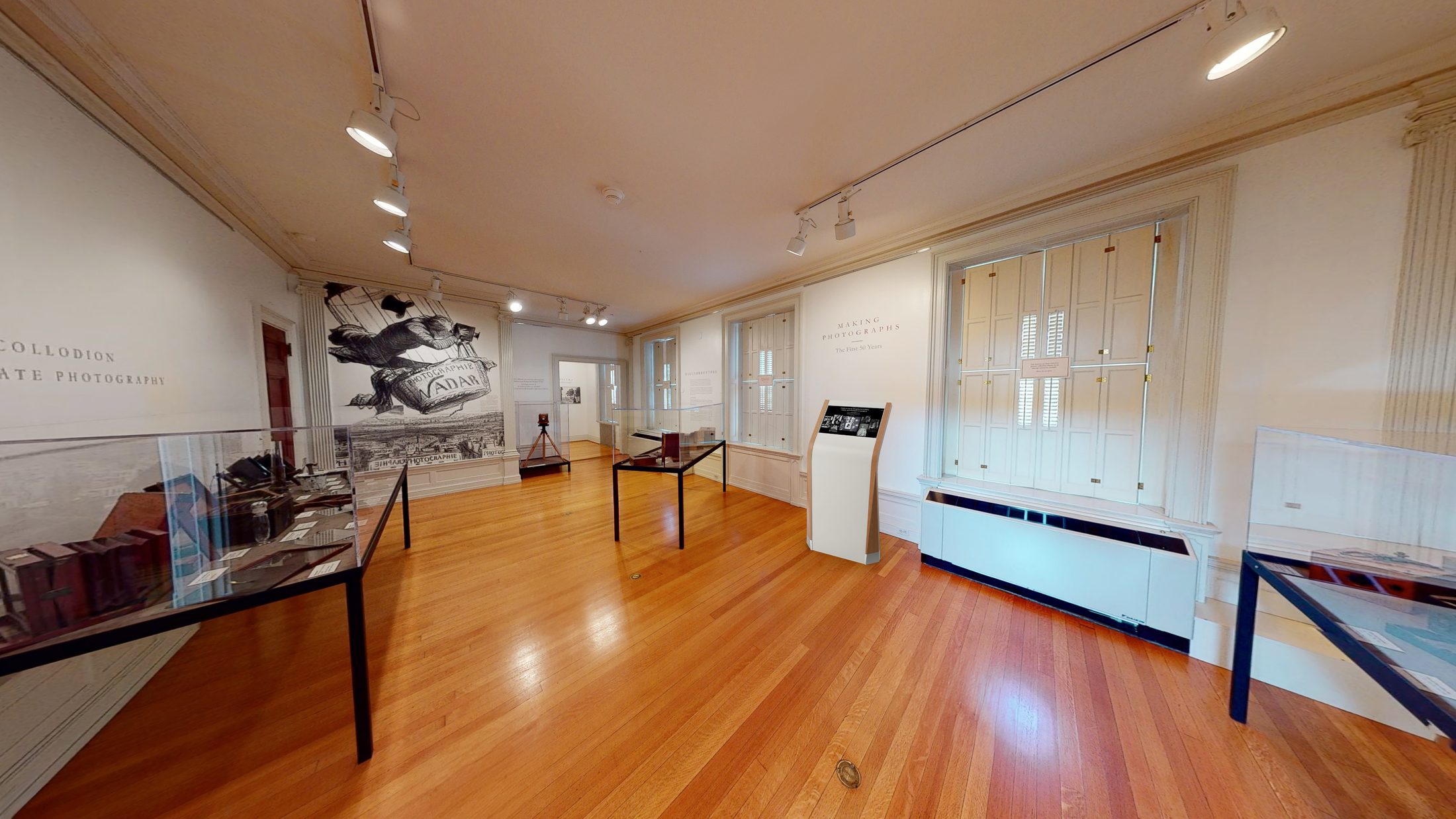
The finished piece is a clickable Figma prototype, designed for a museum kiosk but just as able to live on the web. It runs from the 1880s into the digital age in seven chapters.